
Focus Areas
Project Design & Implementation
To strengthen structured trade in Malawi, ACE Trust has relentlessly developed and improved projects supporting smallholder farmers (SHFs) and micro-, small- and medium-sized enterprises (MSMEs). The agricultural sector in Malawi is an ever-evolving one, whether it be in terms of market dynamics or government policies. This is the reason we work closely with FOs and tailor training to ensure they can adapt to these changes. ACE Trust has embarked on a variety of projects in collaboration with partners – it has built 13 rural warehouses for farmer organisations (FOs), developed rural warehouse models, implemented the ACE Market Information System (MIS), developed the ACE Marketing School (AMS) and Farmer Business School (FBS), developed access to finance modalities, introduced the Warehouse Receipt System (WRS), introduced access to input modalities. Moreover, it has promoted policies conducive to and enabling structured trade in Malawi.
SUCESS CASES
Chithumba
Chithumba was introduced in 2015 as an input loan programme to provide smallholder farmers with inputs, training, and market access. In practice, FOs receive inoculants and seeds, and repay the loan with a portion of their harvest at the end of the season. Chithumba is a comprehensive model that spans the entire production cycle. In fact, it offers GAP trainings and access to markets for farmers to sell their surplus volumes at a good price.
After testing, having readapted the model, and grown over the years, Chithumba transitioned to a limited company in 2021. Along the way, it has gradually expanded its service offering to the Market Maker trade modality and transport services. Chithumba has now become a self-operating entity, demonstrating the potential and viability of ACE Trust projects, always working towards a thriving agricultural sector in Malawi.

Zaulimi App
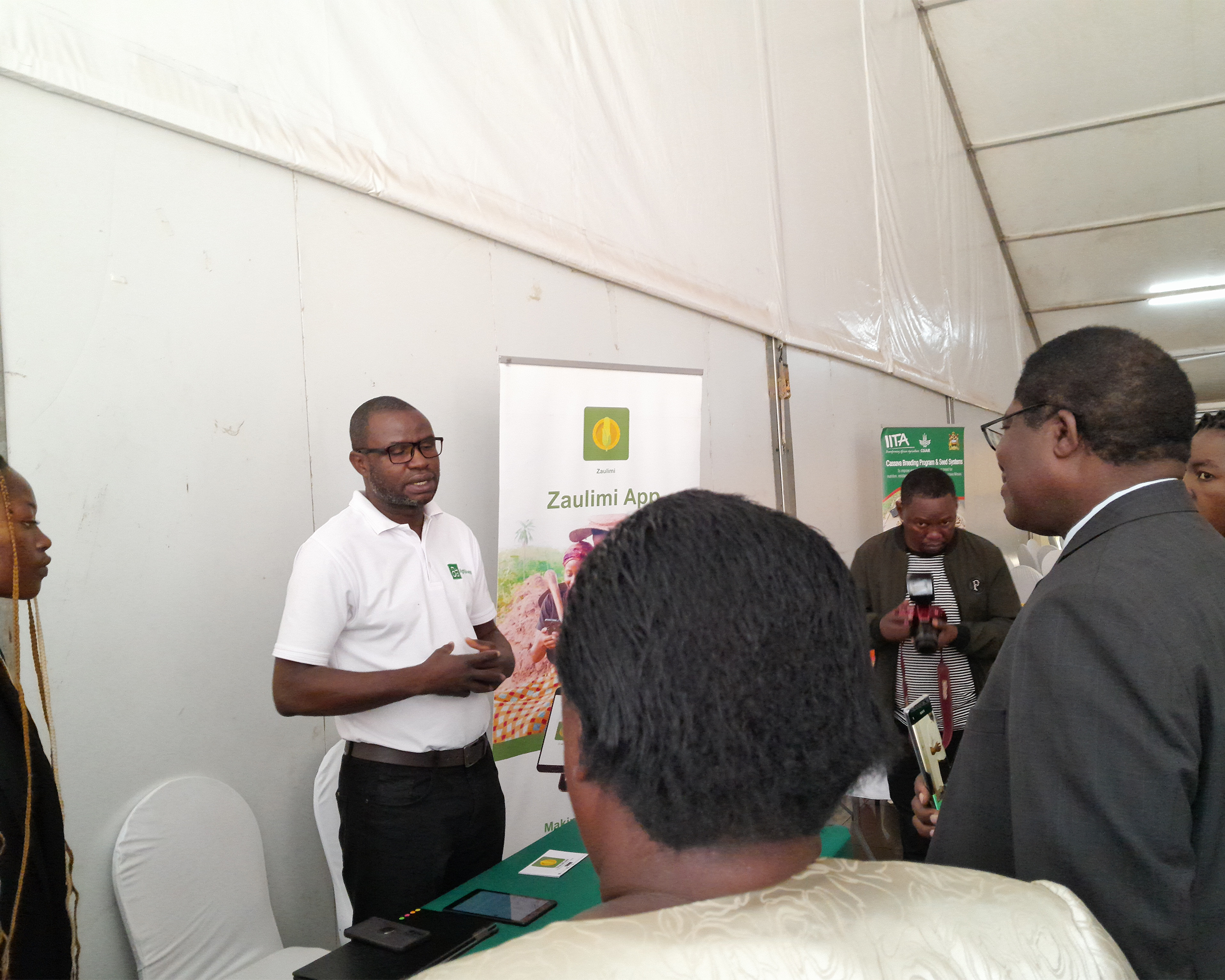
In collaboration with Welthungerhilfe (WHH), ACE Trust developed the Zaulimi App. This is an inclusive app helping farmers and extension officers with essential production and market information for selected crops, livestock, and agroforestry. Specifically, it shares market price information for major crops that are traded through ACE. This creates an additional channel for stakeholders to access our services – wherever they are and without needing to be registered on our MIS.
Beyond these features, Zaulimi App contains modules like Good Agricultural Practices (GAP), Farming is Business, and Market Place. These are all accessible in both Chichewa and English, through the audio option, and offline. Zaulimi thus makes agricultural production and price information available to farmers and traders across Malawi from anywhere at any time.

Market Information
Market information is one of ACE’s pillars. Price information and access to markets is essential for SHFs to boost their growth and livelihoods. That’s why ACE Trust introduced its Market Information System (MIS) in 2011, providing SHFs, traders and market players with consistent market price updates. The MIS operates in tandem with the Warehouse Receipt System (WRS). By storing commodities in a certified warehouse, SHFs can wait for market prices to rise and sell them at a competitive price, rather than selling to local vendors at low prices right after harvest. Market prices are disseminated through SMS, WhatsApp, our website, 223 number, and the Zaulimi App, expanding the reach and impact of our MIS. Ultimately, this helps farmers on several levels: farmers’ awareness of commodity exchanges; commodity sales; commodity sales prices; sales through structured markets; level of commercialization.

Key figures
200,000
Contacts Registered on MIS
+53,000
Accessing market prices through Zaulimi
45%
Malawian farmers rely on marketing information
Capacity Building
Ensuring farmers and FOs can operate smoothly and efficiently is crucial. This is the reason we provide a series of tailored measures to each FO, so they can adopt the best agricultural practices and trade their commodities competitively. We have thus developed a set of capacity building and support activities to inform rural actors of the opportunities and processes relevant for participating in structured trade, such as the ACE Marketing School (AMS) and Farmer Business School. As we operate across the country, it is important we remain aware of different issues and developments. Constant engagement with FOs through our Rural Marketing Advisors (RMAs) is therefore essential, as they transmit up-to-date knowledge and assistance. We continuously engage with them and identify potential gaps and areas to improve our service implementation. Ultimately, ACE Trust’s capacity building activities are aimed at supporting all of ACE’s entities, creating a cohesive operational environment.
ACE Marketing School (AMS)
Beyond boosting smallholder farmers’ productivity, securing access to markets and becoming strong market players is crucial. AMS addresses just that, being a bespoke training service providing farmers with the knowledge and skills to participate in structured markets. It is a three-day training for 30 members of a partner FO with modules on: ACE services; Market information; Collective marketing and aggregation; Trade facilitation; An introduction to the WRS; ACE’s input supply model; Developing and following a marketing plan.
This intensive training is supported with ongoing engagement from ACE RMAs who provide advice and support to FOs, helping turn the newly acquired knowledge and skills into improved access to markets and higher prices for their commodities. Coupled with SMS price information, this helps them know that the price they are offered is a good one, and ultimately sell on that basis
Key figures
20,750
Farmers took part in AMS
154
AMS training delivered
9.8
MT average traded volume per farmer through AMS
47,793
SHFs trained in structured markets ans sensitized on trade models
Partnerships
Partnerships have been central to ACE Trust projects. Development partners, non-governmental organizations (NGOs), private sector, banks, and the Malawian Government have all played a catalytic role on different levels - from providing technical assistance like the AMS or Farmer Business School, to financing these. Engaging these partners has not only revealed meaningful synergies for actors along agricultural value chains in Malawi, but it has also resulted into successful outcomes. Beyond these external actors, fostering strong relationships with our farmer organisations (FOs) has enabled us to gain their trust and loyalty. Over the years, this has enabled us to diversify our projects while expanding our reach
Dynamic figures
7
Development partners
719
FOs
Our partners
CTA, FIDP, Flanders, GIZ, MICF, WHH, CIP, AGRA








What We Do?
ACE Trust ensures that our services are relevant and impactful for anyone seeking to access structured trade within Malawi.
ACE Trust main Functions
Structured trade development for ACE Africa, Chithumba and CSL
Inclusivity
Organizational support functions for all entities